




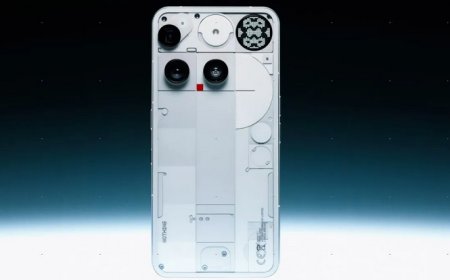












Apple Developing Touch-Sensitive iPhone Cases for Future Models
A new rumor from China suggests Apple is developing touch-sensitive iPhone cases that work as secondary input surfaces. These advanced cases may include capacitive or pressure-based touch zones, allowing users to control functions like volume, camera actions, and system shortcuts directly from the case. Backed by Apple’s previous patents, the idea aligns with rumors of a future bezel-free iPhone,Apple has also explored using NFC for communication and even embedding Touch ID into the case. These developments align with rumors of a bezel-free, button-less 20th-anniversary iPhone expected in 2027. The interactive case would offer ergonomic controls while supporting Apple’s vision of a fully immersive, all-screen iPhone design.

Apple is always at the forefront of innovation, constantly pushing the their boundaries of what is possiblle in smartphone design. Now, according to a new rumorr circulating from China, Apple is exploring the creation of official iPhone cases that function as interactive touch surfaces rather than simple protective covers. These cases could act as secondary input interfaces, offering users a completely new way to control their device.
The rumor originates from the well-known Weibo leaker Instant Digital, a source with a solid track reccord for predicting Apple’s prototype developments. According to the leak, Apple is working on iPhone Pro series cases equipped with built-in touch-sensitive sensor layers. These sensors, integrated directly into the outer surface of the case, could let users perform actions simply by tapping, sliding, or pressing on the case itself.
While the leaker didn’t provide many of the technical details, Apple’s previous patents give us astrong clues about what these casess might be able to do.
Patents Reveal Apple’s Vision for Interactive Cases
In 2024, Apple filed an intriguing patent titled “Case With Input for Electronic Device.” This document describes a protective iPhone case that not only shields the phone but also acts as an interactive input layer.
Touch-Sensitive Surfaces Built Into the Case
The patent explains how touch-sensitive zones could be embedded into the case material. These zones may use:
Capacitive sensors, similar to touchscreen technology
Pressure-based sensors, which detect varying force levels
Multi-gesture zones, allowing swiping or sliding motions
These sensors could triger many actions normally performed by the phone’s physical buttons, such as:
Volume up/down
Camera shutter activation
Scrolling
Shortcut activation
App-specific gestures
Once the case is attached, the iPhone wouldbe automatically detect it and reroute button control to the case’s touch surfaces.
This means users could interact with their phone in a new and more ergonomic way—especially if the device itself has fewer physical buttons.
Communication Between the Case and the iPhone
The patent also describes how the case could communicate with the device. Possible methods include:
NFC (Near-Field Communication)
Magnetic or Smart Connector-style interfaces
Wireless low-energy communication
The case would not just be a protective accessory; it would become a smart extension of the iPhone, capable of processing inputs and delivering commands to the device.
Touch ID Integrated Into the Case
One of the more futuristic ideas in Apple’s patent involves embedding a Touch ID fingerprint sensor directly into the case. This would allow users to unlock the phone or authorize secure actions by simply placing their finger on the case rather than the screen or home button.
This suggests Apple may not be abandoning Touch ID e
ntirely—it could simply relocate it to external accessories.
The 20th-anniversary iPhone in Fall 2027
This would align with Apple’s desire to mark the anniversary with a major design leap—just as it did with the original iPhone in 2007.
Final Thoughts
Apple has always explored ways to create a seamless, intuitive user experience. The idea of turning an iPhone case into a functional input device is not only innovative but practical—especially for a future where physical buttons may disappear entirely.
Interactive, touch-sensitive cases could provide:
More comfortable controls
Bigger touch zones
Extra security features
A solution for bezel-free design challenges
While still in the rumor stage, this concept lines up with Apple’s patient history and industry direction. If these developments are real, the iPhone experience may soon extend beyond the device itself—into the very case that protects it.
What's Your Reaction?
 Like
1
Like
1
 Dislike
0
Dislike
0
 Love
0
Love
0
 Funny
0
Funny
0
 Angry
0
Angry
0
 Sad
0
Sad
0
 Wow
0
Wow
0