


















Quantum Computing: The Next Big Tech Revolution Changing Science, Finance & Medicine
Quantum computing is emerging as one of the most transformative technologies of the coming decade. Unlike traditional computers that rely on bits, quantum systems use qubits that can exist in multiple states at once, allowing them to solve complex scientific, financial, and mathematical challenges far faster than classical machines. Major companies like IBM, Google, Microsoft, BMW, Airbus and leading biotech firms are investing heavily in quantum processors that could advance drug discovery, materials science, cryptography, climate research, and financial modeling. While the technology promises massive breakthroughs—potentially generating over $1.3 trillion in value by 2035—it still faces challenges, particularly the fragile nature of qubits. Even so, experts believe quantum computing is set to reshape the future of innovation.

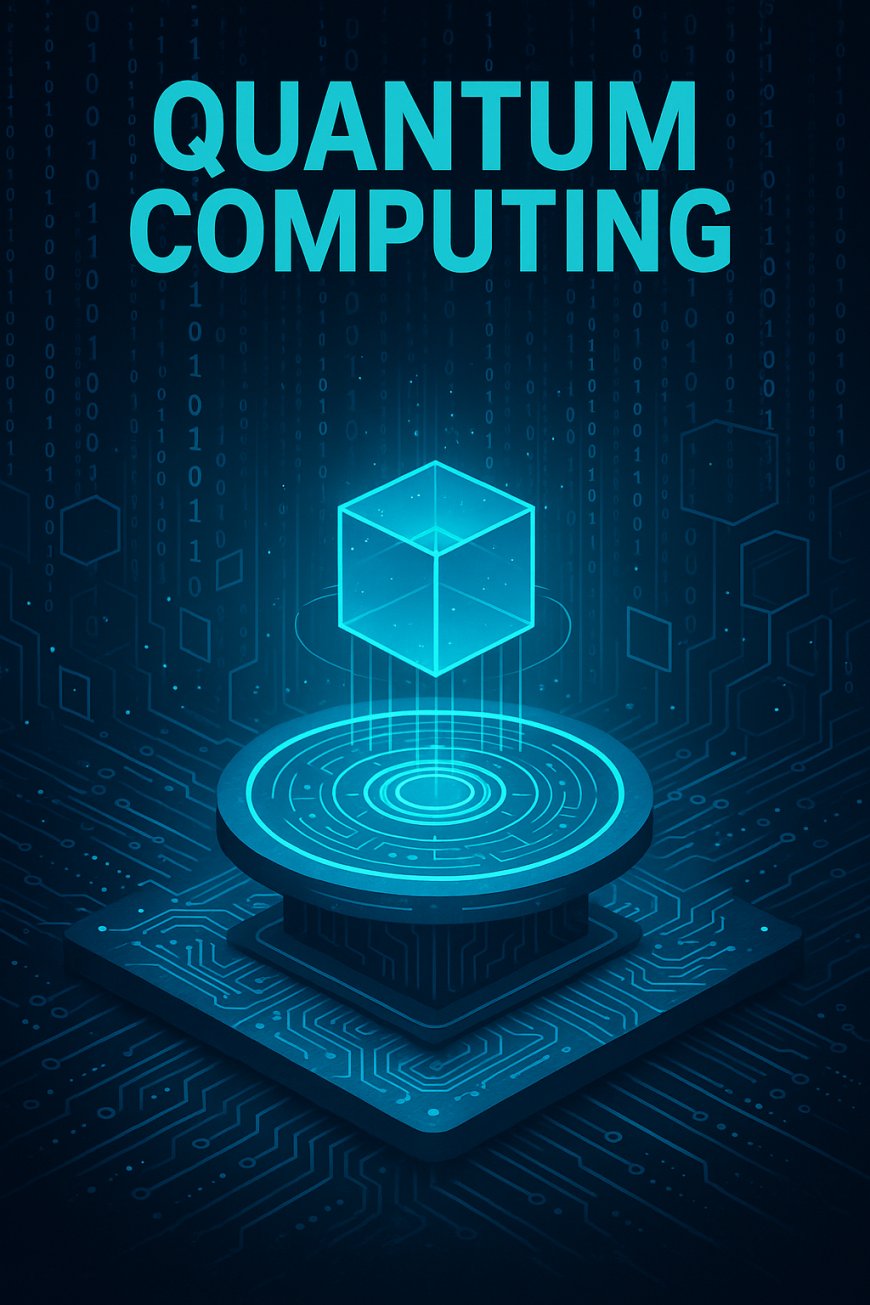
Quantum Computing: The Next Big Tech Revolution Changing the World
A major transformation is taking place in the world of technology, and it goes farbeyond artificiall intelligence. These time, the shift is being powered by quantum computing— field that has been studied for decades but is now reaching a turning point as major tech companies push it closer tothe real-world use.
Quantum computers promise to solve problems that today’s fastest supercomputers would struggles with thousands of years. Tasks such as discovering new drugs, analyzing financial markets, and developing advanced materials could soon be completed in minutes and or hours. As industries race to innovate, quantum technology is emerging as the next frontiers capable of reshaping the globallly economy—potentially adding over $1.3 trillion in value by 2035, according to McKinsey.
While the concept might sound futuristic, companies like IBM, Google, Microsoft, and others are making rapid progress. Their announcements doesn’t simply upgrade classical machines but reimagines how computing works at the most fundamental level.
What Makes Quantum Computers Different?
Traditional computers, from smartphones to supercomputers, process information using bits—binary units represented as either 0 or 1. Quantum computers, however, use quantum bits, or qubits, which can exist as 0, 1, or both simultaneously. This is a special property, called superposition, allows quantum computers to explors multiple possibilities at once.
This unique behavior gives quantum computers an enormous advantage when solving complex problems. They can analysed vast combinations of data in parallel, dramatically reducing the time needed for scientific or mathematical calculations.
However, this doesn’t mean your laptop will be replaced anytime soon. Quantum computers are not designed for everyday tasks like browsing the internet or editing photos. Instead, they excels in specialized areas including:
Chemistry and drug discovery
Financial modeling
Climate and environmental simulations
Materials design for cars and aircraft
Cryptography and advanced cybersecurity
In these fields, quantum computing could deliver breakthroughs once thought impossible.
IBM’s New Quantum Innovations
IBM recentl announced two major advancements: the Loon processor and the Nighthawk quantum chip. These may they next-generation processors are designed to perform more sophisticated quantum computations than their predecessors, representing a major step forward in scalability and reliability.
These advancements are fabricated at the Albany NanoTech Complex, one of the leading hubs for quantum hardware development. With increasing investments from tech giants and government initiatives, the race to create practical, scalable quantum machines has accelerated.
Google, Microsoft, and various startups have also revealed new quantum milestones over the past few years. The momentum is unmistakable: quantum computing is moving from theoretical research to real-world experimentation.
Why Industries Are Racing Toward Quantum Technology
The potential impact of quantum computing extends across nearly every major industry:
1. Healthcare & Drug Discovery
Quantum computers can analyze molecular structures far too complex for classical systems. Companies such as Accenture Labs, Biogen, and 1QBit are exploring how quantum algorithms could speed up drug development and reduce research costs.
If quantum simulations can replace certain lab tests, researchers may uncover life-saving treatments in a fraction of the usual time.
2. Automotive & Aerospace
Companies like BMW and Airbus are working with quantum startup Quantinuum to design better fuel cells and materials. By simulating chemical reactions at the quantum level, engineers can develop more efficient batteries, lighter aircraft components, and sustainable materials.
3. Finance & Banking
Banks rely on complex models to predict market changes. Quantum computing could analyze thousands of scenarios instantly, helping financial institutions make better decisions, reduce risk, and detet fraud more effectively.
4. Environment & Climate Research
Quantum systems could model Earth’s climate with unprecedented accuracy. Scientists may soon predict extreme weather events or develop new carbon-capture technologies faster than ever before.
5. Cryptography & Cybersecurity
One of the most discussed uses of quantum computing is breaking today’s encryption systems. Because qubits can process huge amounts of data simultaneously, quantum computers could crack codes that classical machines cannot.
This is both a risk and an opportunity: nations and companies are racing to develop quantum-safe encryption to stay ahead of potential threats.
The Challenges Ahead
Despite the excitement, quantum computing is far from perfect. One of the biggest challenges is the fracility of qubits. They are extremely sensitive to:
Changes in temperature
Light
Electromagnetic interference
Vibrations
A New Era of Computing Is Coming
Quantum computing represents more than just another tech upgrade—it’s a complete transformation in how we solve problems. As one professor explained, “A fighter jet is not a faster Ferrari. It’s an entirely different machine.” The same is true of quantum computers: they operate on principles that classical machines simply cannot match.
Although it may take years before quantum computers become mainstream tools, their potential impact is staggering. From medicine and finance to climate research and digital security, quantum technology is poised to reshape the future in ways we’re only beginning to imagine.
We stand on the edge of a seismic shift in computing—one that could unlock discoveries far beyond the reach of today’s most powerful technology.
What's Your Reaction?
 Like
0
Like
0
 Dislike
0
Dislike
0
 Love
0
Love
0
 Funny
0
Funny
0
 Angry
0
Angry
0
 Sad
0
Sad
0
 Wow
0
Wow
0