




















Meta Wins Landmark Antitrust Case Over Instagram and WhatsApp Purchases
Meta Platforms has won a major antitrust case in the United States, marking the first significant victory for Big Tech in the ongoing government crackdown on market dominance. A federal judge ruled that Meta does not hold a monopoly in social media, despite its acquisitions of Instagram and WhatsApp. The court emphasized that competition from platforms like TikTok and YouTube has reshaped how people share content online. The ruling is a major setback for the Federal Trade Commission (FTC), which sought to force Meta to unwind the deals made in 2012 and 2014.Meta Platforms has defeated a high-profile U.S. antitrust lawsuit aiming to unwind its acquisitions of Instagram and WhatsApp. A federal judge ruled that Meta does not hold a social media monopoly, pointing to strong competition from TikTok, YouTube, and other major platforms. The FTC argued the acquisitions harmed competition, but the court disagreed, citing major shifts in the digital landscape.

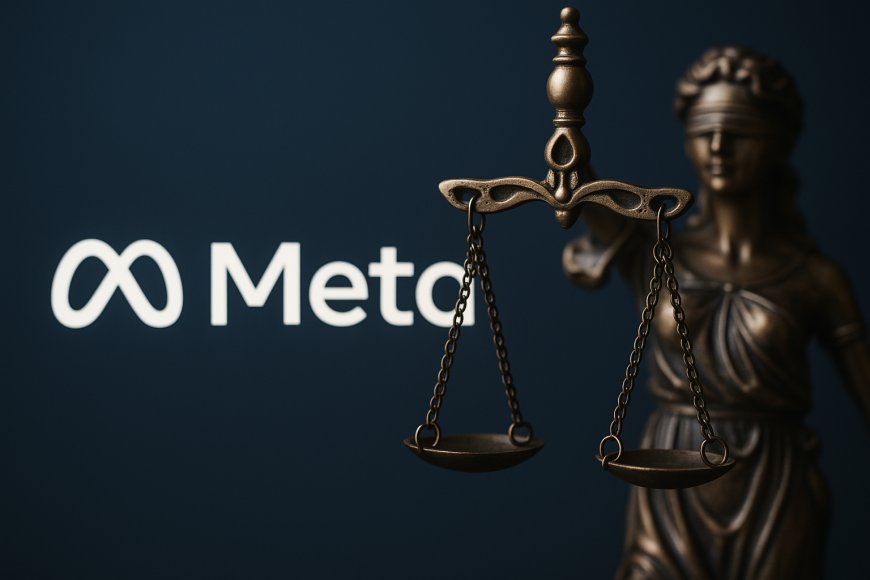
Meta Platforms, the parent company of Facebook, has achieved a major legal victory by defeating a U.S. government antitrust lawsuit that sourght to break up the company’s ownership of Instagram and WhatsApp. The ruling marks the first significant win for a BigTech company in the current wave of antitrust actions pursued by U.S. regulators.
The case, brought by the Federal Trade Commission (FTC), aimed to unwind Meta’s purchase of Instagram in 2012 and WhatsApp in 2014. Regulators argued that Meta acquired this companies to eliminiate emerging competitors and secure dominance in the social media marketplace. According to the FTC, Meta spent billions of dollars on these deals to prevent potential rivals from gaining momentum.
However, U.S. District Judge James Boasberg rejected this argument. In his ruling, he stated that Meta does not hold a monopolly in social media and emphasijzed that the competitive landscape has changed dramatically in recent years. He noted that platforms like TikTok and YouTube now play a major role in how people create, consume, and share content online. These platforms have significantly altered user behavior and introduced strong competition for Meta’s core apps, Facebook and Instagram.
The judge highlighted evedience presented during the trial showing that users often switch between platforms like TikTok, YouTube, and Meta apps based on features, outages, or personal preference. This demonstrated that users view multiple platforms as interchangeable for consuming videos, sharing content, and communicating with friends. Because of this, the court concluded that Meta’s acquisitions of Instagram and WhatsApp did not eliminate competition in the market.
For the FTC, the ruling is a major setback. The agency has been intensifying its antitrust enforcement efforts against several major technology companies. It argued that at the time Meta bought Instagram and WhatsApp there startups posed a real threat to Facebook’s dominance in personal content sharing. The FTC pointed to internal company communications, including a 2008 email from Mark Zuckerberg stating that “it is better to buy than compete,” as evidence that Meta used acquisitions to suppress comapetition. But the judge ultimately found that this evidence was not enough to prove a monopoly under current market conditions.
Meta, on the other hand, defended its business strategy as a legitimate approach to innovation. The company argued that acquiring businesses with strong products and features is a common and valid business practice, especially in the fastchanging technology markets. Meta also stressed that it faces significant pressure from major competitors such as ByteDance’s TikTok, Google’ YouTube, Snapchat, and even Apple’s messaging tools. All these options give consumers a wide range of choices, making it harder for any one company to dominatet the industry.
The ruling also emphasized how significantly the social media landscape has transformed over the past decade. When Facebook first rose to popularity, users mainly posted personal updates and photos to share with friends and family. Today, social platforms are more diverse and include video-sharing apps, creator-focused platforms, private messaging tools, and interest-driven communities. This evolution, according to the judge, shows that Meta can no longer be viewed as holding a monopoly in a traditional social media category.
In response to the ruling, Meta expressed satisfaction, saying its platforms contribute to innovation and economic growth. Company representatives said they were committed to partnering with the U.S. government and continuing to invest in American technologies. Meanwhile, the FTC expressed disappointment and announced plans to review its options for further action.
Meta’s stock reacted positively to the news, reducing earlier losses and closing only slightly down for the day. The ruling not only strengthens Meta’s position but may also influence the outcome of other antitrust cases, including the FTC’s separate lawsuit against Amazon.
Overall, the decision underscores the rapid evolution of the digital economy and highlights how regulators must adapt to changing technologies and user behaviors when assessing competition.
What's Your Reaction?
 Like
0
Like
0
 Dislike
0
Dislike
0
 Love
0
Love
0
 Funny
0
Funny
0
 Angry
0
Angry
0
 Sad
0
Sad
0
 Wow
0
Wow
0